
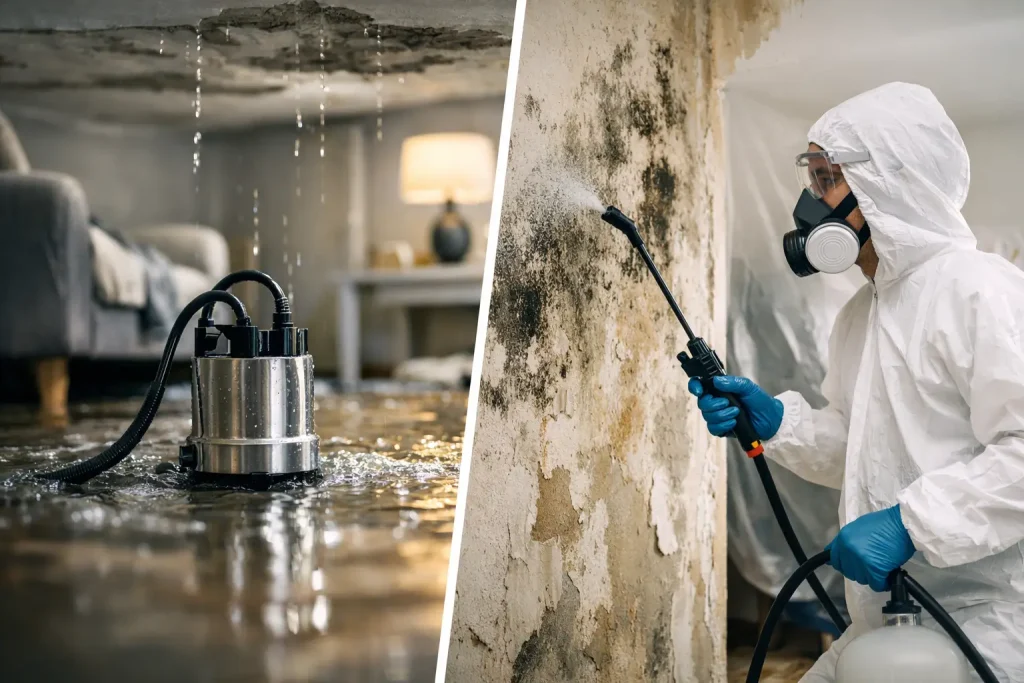
A burst supply line can soak drywall in minutes. A slow leak behind a bathroom vanity may take months to reveal itself, often after a musty odor or dark staining appears. Understanding water damage vs mold remediation helps property owners make the right call early, protect occupants, and avoid paying for repairs twice.
Water damage restoration and mold remediation are related services, but they address different conditions. One focuses on removing water and drying affected materials. The other focuses on containing, removing, and correcting mold growth and the moisture condition that allowed it to develop. In many Washington, DC and Maryland properties, both services are needed, but the order and scope matter.
Water Damage vs Mold Remediation: The Core Difference
Water damage restoration is the immediate response to unwanted water. The goal is to stop the source, extract standing water, dry the structure, assess damaged materials, and return the affected area to a safe, usable condition. Common causes include broken pipes, appliance leaks, roof leaks, overflowing fixtures, storm intrusion, and sprinkler discharge.
Mold remediation is a controlled process used when mold growth is present or likely established within building materials. Its purpose is not simply to spray or wipe visible mold. Proper remediation identifies the moisture source, limits the spread of spores during work, removes contaminated materials when necessary, cleans affected surfaces, and verifies that the area is dry enough for reconstruction.
The difference is timing as much as technique. Water restoration is often urgent and begins as soon as a loss occurs. Mold remediation may become necessary after water has been present long enough for microbial growth, usually when drying was delayed, incomplete, or impossible because moisture remained hidden.
When Water Damage Restoration Is the Right Service
If water entered the property recently and no visible mold or persistent odor is present, water damage restoration is generally the first priority. The most important steps are stopping the water source and beginning professional drying quickly.
A qualified restoration team will inspect the affected area, identify how far moisture has traveled, remove standing water, and use commercial drying equipment to lower moisture levels in materials such as drywall, framing, flooring, insulation, and subflooring. Moisture readings matter because a surface can feel dry while materials behind it remain wet.
Fast action can preserve materials that would otherwise need replacement. Hardwood flooring, drywall, trim, cabinetry, and contents may be salvageable depending on the water source, the length of exposure, and the construction of the building. Clean water from a supply line presents different concerns than sewage backup or floodwater, which can introduce contaminants and may require more extensive removal and cleaning.
For landlords and property managers, a quick, documented response also helps reduce unit downtime and supports the insurance claim process. For homeowners, it can prevent a small plumbing event from turning into a larger reconstruction project.
Drying Is Not the Same as Waiting
Opening windows, running household fans, and placing towels on a wet floor may help with a minor spill. They are not a replacement for proper extraction and moisture monitoring after a significant leak, overflow, or intrusion event.
Water moves into wall cavities, beneath flooring, under baseboards, and into insulation. If those materials remain damp, mold growth and material deterioration can follow even when the visible surface looks normal. The correct scope depends on the type of water, the affected materials, and how long they were wet.
When Mold Remediation Is Necessary
Mold remediation is appropriate when visible mold is present, when a strong musty odor suggests concealed growth, or when an inspection finds elevated moisture and contamination behind finished surfaces. It may also be needed after an older water event that was never fully dried.
Mold can grow on drywall paper, wood framing, carpet backing, insulation, ceiling tiles, and other materials that remain damp. Bathrooms, basements, utility rooms, crawl spaces, mechanical closets, and areas below roof leaks are common locations. In multifamily buildings, moisture can also travel from an adjacent unit or a shared plumbing line.
A professional remediation plan begins with determining why the mold developed. Removing visible growth without correcting the leak, condensation issue, drainage failure, or ventilation problem invites the problem to return. This is why mold work should be treated as a building moisture issue, not just a cleaning task.
What Professional Mold Remediation Usually Includes
The exact process depends on the affected area and material, but a proper scope commonly includes containment, controlled removal, cleaning, drying, and repairs. Containment helps keep disturbed spores from moving into unaffected rooms during demolition and cleaning.
Porous materials with significant contamination, such as mold-damaged drywall or insulation, often need to be removed. Nonporous or semi-porous materials may be cleaned and treated when their condition allows. The affected area should then be dried and repaired only after the moisture source has been corrected.
For larger or more complex conditions, testing and clearance procedures may be appropriate. This can be particularly useful for commercial facilities, occupied rental units, sensitive environments, or situations involving insurance documentation and tenant concerns.
Why the Services Often Overlap
The comparison of water damage vs mold remediation is not always an either-or decision. A pipe leak discovered the same day may only require water extraction, structural drying, and selective repair. The same leak discovered weeks later may require both water damage restoration and mold remediation because moisture has already supported growth behind the wall.
A common sequence is to first stop the water and stabilize the area. Next comes removal of wet or contaminated materials, controlled drying, and mold remediation if growth is confirmed. Reconstruction follows after the structure is clean and dry. This may include replacing drywall, insulation, flooring, trim, cabinets, or other damaged finishes.
Working with a contractor that can manage restoration and reconstruction helps keep the project coordinated. Instead of separating emergency mitigation from repair work, property owners can move from damage assessment through code-compliant rebuilding with a clearer scope and fewer handoffs.
Signs You Should Not Wait
Some conditions require a prompt inspection even if the amount of visible water seems limited. Pay attention to staining on ceilings or walls, peeling paint, warped flooring, soft drywall, damp carpet padding, repeated plumbing leaks, condensation around windows or ductwork, and odors that return after cleaning.
A musty smell is especially worth investigating. It does not always mean extensive mold, but it can indicate that moisture is trapped inside a wall, below flooring, or in a crawl space. The longer those conditions continue, the more likely the repair scope will expand.
Property managers should also take recurring maintenance tickets seriously. A tenant reporting a leak, discoloration, or odor more than once may be identifying an unresolved building condition rather than an isolated housekeeping issue.
Choosing the Right Scope for Your Property
The right service depends on the source of moisture, the category of water, the number of affected materials, and the length of time the area remained wet. A clean-water overflow caught immediately is different from a sewage backup, stormwater intrusion, or a leak that has been concealed for months.
Do not assume that every stain requires full mold remediation, and do not assume that every water loss can be handled with a fan and a patch of paint. An experienced contractor should inspect the affected area, use moisture detection tools where appropriate, explain what can be saved, and identify materials that should be removed for a safe, lasting repair.
For occupied homes, rental properties, and commercial spaces, the practical goal is the same: correct the source, dry the structure, address contamination when present, and rebuild the area properly. Capitol Area Services Inc. approaches restoration work with that full-project perspective, from assessment and mitigation through repairs that restore the property’s condition and function.
If you have water where it does not belong, act before the visible damage becomes the full extent of the problem. Early inspection and a documented plan can protect the building, the people using it, and the value of the investment.