
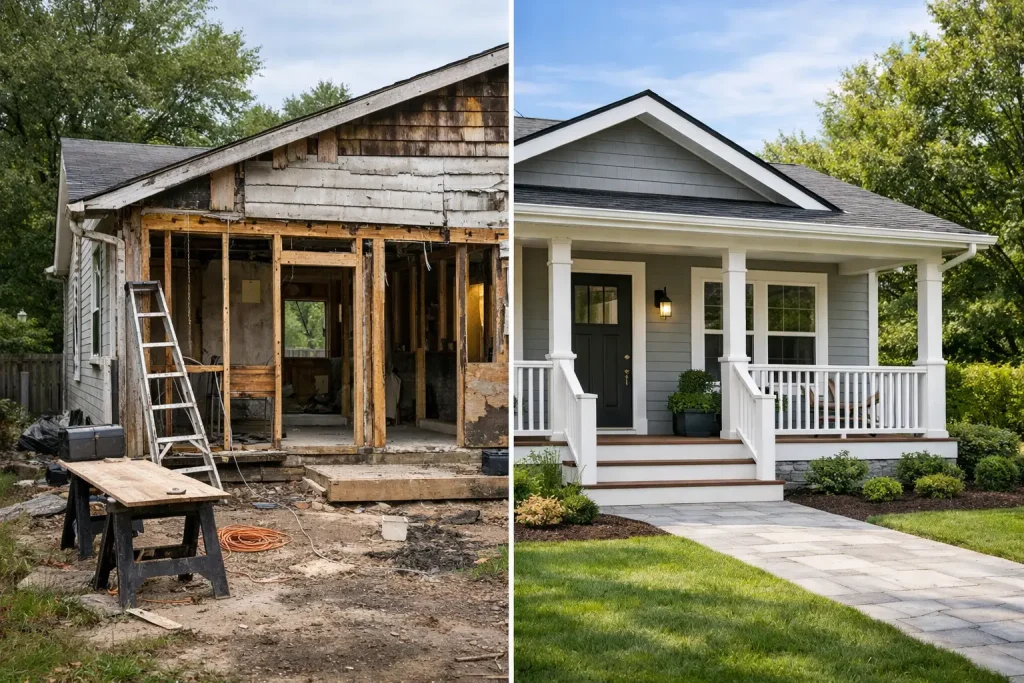
A house with outdated systems, water damage, an unsafe deck, or a kitchen frozen in another decade can be a smart purchase – if the renovation is planned correctly. A 203k renovation before and after is not simply a set of attractive photos. It is proof of how a detailed scope of work, approved financing, qualified contractors, and inspections can turn a property with serious deficiencies into a safe, functional home.
For buyers in Washington, DC, Prince George’s County, and nearby Maryland communities, the FHA 203(k) program can make a fixer-upper more realistic to purchase. It combines the acquisition or refinance loan with eligible renovation costs. The opportunity is meaningful, but so is the responsibility: the work must be properly documented, priced, scheduled, and completed to program requirements.
What a 203k Renovation Before and After Really Shows
The most successful before-and-after projects improve more than appearance. Before work begins, a property may have peeling paint, worn flooring, dated bathrooms, roof concerns, inefficient windows, plumbing issues, or code-related repair needs. After completion, the home should be safer, more durable, and better suited to everyday use.
The visible changes often get the most attention. A closed-off kitchen may become an open, workable cooking space. A damaged bathroom may become clean, accessible, and properly ventilated. Old carpet may be replaced with durable flooring, and worn exterior surfaces may be repaired and painted.
However, the work behind the walls often matters more. Electrical upgrades, plumbing repairs, moisture control, structural corrections, insulation, HVAC improvements, and roof repairs protect the value of the finished project. A beautiful kitchen does not solve a leaking pipe. Fresh paint does not correct unsafe wiring. A credible 203(k) renovation addresses the property’s condition first, then makes room for the improvements that support the owner’s goals and budget.
Before Renovation: Start With the Property’s Actual Condition
A 203(k) project begins with an honest assessment, not a wish list. Buyers should evaluate the home carefully with a qualified inspection and contractor input before finalizing the renovation scope. In older DC and Maryland housing stock, seemingly minor issues can reveal larger needs once work begins.
For example, a bathroom update may expose subfloor damage caused by a long-term leak. Replacing kitchen cabinets may require electrical work to bring circuits, outlets, and lighting up to current expectations. Removing a wall may involve structural review, permits, and added framing. These are not reasons to avoid a property. They are reasons to plan the project with enough detail and contingency.
The lender, consultant where required, borrower, and contractor each have a role in defining the work. The contractor’s proposal should clearly identify labor, materials, permits, and the sequence of repairs. Vague allowances and incomplete descriptions can create avoidable problems once the loan closes and construction begins.
Separate Needs From Wants
A practical way to establish the scope is to divide work into condition-related repairs and elective improvements. Health, safety, water intrusion, mechanical systems, structural conditions, and code concerns should lead the conversation. Cosmetic updates can be included when the budget allows, but they should not displace work that makes the home sound and livable.
This does not mean a 203(k) renovation has to look purely functional. A well-designed project can combine required repairs with updated finishes, improved storage, better lighting, and layouts that fit the homeowner’s life. The key is making decisions in the right order.
The Middle of the Project Is Where Planning Is Tested
The period between the “before” and “after” photos is where project management matters. FHA 203(k) work follows an approved scope, and funds are generally released through scheduled draws as work is completed and reviewed. That structure helps protect the borrower, but it also requires coordination.
Permits, material lead times, inspections, weather, and hidden conditions can affect the schedule. In the DC and Maryland area, local permit requirements can vary by jurisdiction, and some homes may require additional attention because of age, prior alterations, or site conditions. A contractor who understands the work and communicates early can help keep those factors from becoming surprises.
Changes should be handled carefully. Homeowners often discover a new finish, fixture, or layout option after construction starts. Some changes are manageable, while others can affect pricing, timing, approvals, or the approved loan amount. The best time to make design selections is before construction, when choices can be priced and ordered without disrupting the work.
A dependable contractor also keeps the jobsite organized and protects completed work as the project progresses. That includes coordinating trades, documenting completed stages, responding to inspection items, and making sure the final details are not rushed. The last 10 percent of a renovation – trim, caulking, paint touch-ups, hardware, fixture adjustments, and cleanup – has a major effect on how the finished home performs and feels.
After Renovation: Measure Results Beyond New Finishes
When the work is complete, the after condition should show a home that is ready to occupy, maintain, and enjoy. The difference may be dramatic: brighter rooms, modern kitchens, refreshed baths, improved curb appeal, and more efficient systems. But homeowners should also look for the less visible indicators of quality.
Doors should operate correctly. Floors should feel solid. Plumbing fixtures should drain and supply water properly. Exhaust fans should work. Exterior repairs should direct water away from the home. Electrical devices should be properly installed and functional. Finishes should be consistent, clean, and appropriate for the space.
The final walkthrough is the time to identify remaining punch-list items, review completed work, and confirm that documentation is in order. Keep records for permits, inspections, product information, warranties, and maintenance instructions. These records are useful for future repairs, resale discussions, and routine property management.
Common 203(k) Before-and-After Mistakes to Avoid
The most costly mistakes usually happen before demolition begins. Underestimating the scope, choosing a contractor based only on a low price, or assuming every upgrade can be added later can create pressure on the budget and timeline. A lower estimate is not necessarily a better value if it excludes permits, preparation, repair work, or realistic labor costs.
Another mistake is focusing too heavily on resale trends instead of the property’s immediate needs. A homeowner may want premium finishes, but the project may first require roof repairs, drainage corrections, electrical upgrades, or mold-related repairs. Spending in the right order protects both the loan investment and the finished home.
It also helps to avoid overly complex selections. Specialty materials can be worthwhile, but they may have longer lead times or create replacement challenges later. For a primary residence, durable and serviceable choices often provide better long-term value than finishes selected only for a photograph.
Choosing the Right Partner for a 203(k) Project
A 203(k) renovation calls for a contractor who can do more than perform a single trade. The project may involve demolition, framing, electrical, plumbing, drywall, flooring, paint, exterior repairs, and code compliance. The contractor must be able to translate the approved scope into organized field work and maintain clear communication throughout construction.
Ask direct questions about licensing, insurance, similar rehabilitation experience, proposal detail, permit coordination, scheduling, and how unforeseen conditions are addressed. You should understand what is included, what could change, and who will be responsible for managing each stage of the work.
Capitol Area Services Inc. brings broad residential renovation, restoration, and repair capability to 203(k) projects across the Washington, DC and Maryland region. For buyers considering a property with real potential and real repair needs, the right first step is a detailed conversation about the home’s condition, the required work, and a scope that can hold up from closing through final inspection.