
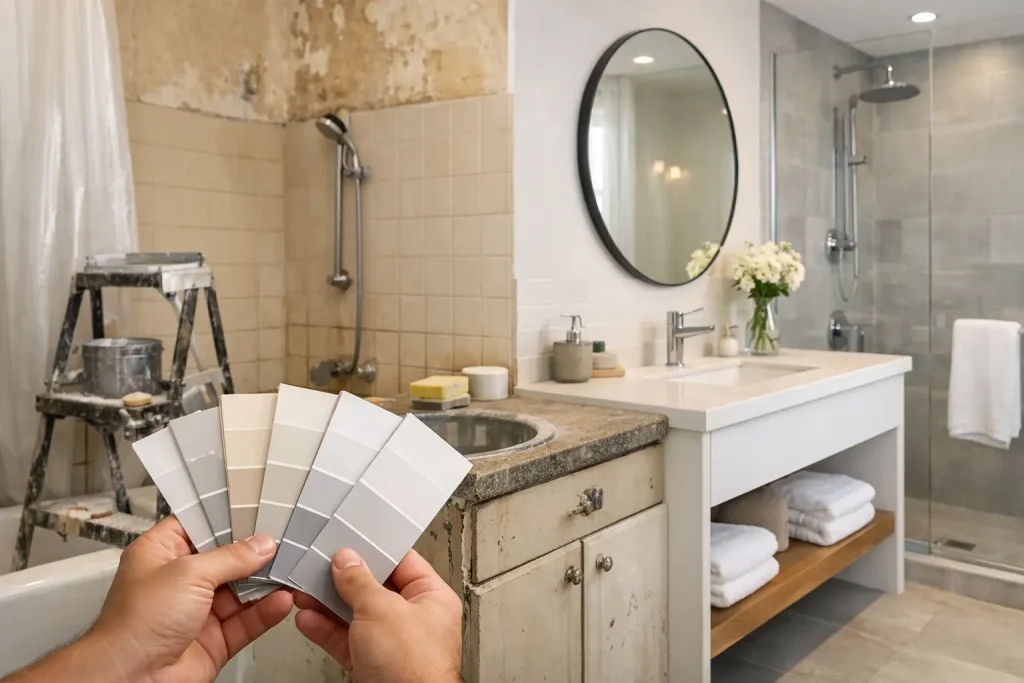
If you are asking should you update bathroom before selling, the real question is whether the work will help your home sell faster, attract stronger offers, or prevent buyers from negotiating the price down. In the DC and Maryland market, bathrooms matter because buyers notice them quickly. But that does not always mean you need a full remodel.
A bathroom can influence a buyer’s impression far more than its square footage suggests. People see worn grout, outdated fixtures, water stains, poor ventilation, and old flooring as signs that other maintenance may have been deferred too. On the other hand, a clean, functional, well-kept bathroom tells buyers the home has been cared for.
Should You Update Bathroom Before Selling or Leave It Alone?
The right answer depends on the condition of the bathroom, the price point of the home, and how competitive your local market is. If the bathroom is damaged, visibly dated, or has obvious functional problems, some level of update is usually worth doing. If it is simply not the latest style but is clean and in good working order, a full renovation may not be the best use of money before listing.
Sellers often make the mistake of thinking in extremes. They either want to gut the room or do nothing at all. In practice, the best pre-sale bathroom work usually falls in the middle. Address defects, improve appearance, and make the room feel clean, bright, and move-in ready.
Buyers are much more forgiving of an older bathroom than a bathroom that looks neglected. A pink tile wall from another era may not stop a sale if the room is spotless and everything works. Loose tiles, soft subflooring, missing caulk, stained ceilings, and leaking fixtures are more serious because they raise concerns about moisture, repairs, and hidden costs.
What Actually Adds Value Before You Sell
Not every bathroom dollar comes back at closing. The updates that usually have the best impact are the ones buyers can see immediately and the ones that remove objection points during inspections.
Fresh paint is one of the simplest improvements. A clean neutral wall color can make a small bathroom feel brighter and newer. Re-caulking around the tub, shower, and vanity also makes a big difference. Old caulk with mildew or cracking sends the wrong signal, even in an otherwise decent room.
Replacing worn fixtures can help more than sellers expect. A dated faucet, rusted shower trim, yellowed light bar, or loose towel hardware can make the whole bathroom feel older. Updated fixtures do not need to be high-end. They just need to look clean, coordinated, and properly installed.
Lighting matters as well. Bathrooms that feel dim or yellow can seem smaller and less clean. Better lighting, a new mirror, and a modern vanity top can shift the room from tired to well-maintained without requiring a major rebuild.
If flooring is damaged or badly outdated, replacing it is often worthwhile. Buyers look closely at bathroom floors because they know moisture exposure is common there. Cracked tile, peeling sheet vinyl, or soft spots should be addressed before the home goes on the market.
When a Full Bathroom Remodel Makes Sense
A full bathroom remodel before selling is usually justified when the existing bathroom has significant wear, active water damage, code or safety concerns, or a layout that hurts marketability. This is especially true in higher-value neighborhoods where buyer expectations are stronger.
If the vanity is deteriorated, the tub or shower is beyond refinishing, the tile is failing, and there are visible moisture issues, piecemeal fixes can start to feel like wasted money. In that case, a properly planned remodel may protect the home’s asking price and reduce inspection-related negotiations.
A full remodel can also make sense if the bathroom is one of the home’s main weak points compared with similar listings. Buyers compare homes quickly. If competing properties have updated baths and yours looks twenty years behind, the gap can affect showing activity and offer strength.
That said, sellers should be realistic about finish level. Before listing, the goal is not to build your dream bathroom. The goal is to deliver a bathroom that fits the home, appeals to the broadest range of buyers, and does not create concerns about quality or maintenance.
When Small Repairs Are the Smarter Move
Many sellers do better with targeted improvements instead of a full remodel. If the layout works, the tile is intact, and there is no sign of leaks or damage, cosmetic work is often enough.
A bathroom that is dated but functional may only need paint, fixture replacement, new hardware, re-grouting, and a deep professional cleaning. Replacing an old toilet seat, updating the vanity light, installing a new mirror, and repairing damaged drywall can change the room’s appearance without pushing the project into major construction.
This approach is often the right call for landlords preparing a unit for sale, homeowners working within a tight listing timeline, or sellers who know the buyer may renovate to their own taste anyway. Spending carefully is usually better than overspending on finishes that do not match the rest of the house.
Problems You Should Not Ignore
If there are functional or moisture-related issues, they should be addressed before the home hits the market. Buyers and inspectors pay close attention to bathrooms because that is where water damage tends to show up first.
Leaks under the sink, slow drains, loose toilets, missing grout, mold around the tub, poor exhaust ventilation, and signs of prior water intrusion are not minor details. They can lead buyers to assume more extensive repairs are needed behind the walls or below the floor. Even if the repair itself is manageable, the uncertainty can reduce offers.
In older homes across DC and Prince George’s County, bathroom work may also raise code compliance questions. Improper electrical updates, plumbing modifications, or ventilation issues can become sticking points during inspections or appraisals. That is one reason pre-sale bathroom improvements should be done correctly, not just quickly.
How Buyers Think About Bathroom Updates
Most buyers are not calculating exact remodeling costs while they tour a home. They are reacting emotionally and trying to estimate hassle. A bathroom that feels clean, solid, and usable today creates confidence. A bathroom that looks like a project creates friction.
This matters because buyers often overestimate repair costs. A seller may see an old vanity and think, that is a simple future upgrade. A buyer may see that same vanity and imagine plumbing problems, hidden water damage, and weeks of contractor scheduling after closing.
The less uncertainty you leave in the room, the better. That does not require luxury materials. It requires visible upkeep and sound workmanship.
How to Decide What Level of Work to Do
Start with condition, not style. Ask whether the bathroom has any active problems, visible damage, or signs of deferred maintenance. Then look at market position. Is your home competing against recently updated properties, or is it expected to need some cosmetic improvement at its price point?
Next, consider the age and consistency of the rest of the home. A fully remodeled bathroom in a house with older kitchens, worn paint, and dated flooring may not deliver much return. Buyers notice inconsistency too. The bathroom should support the overall condition of the property, not overshoot it.
Finally, think about timing. If you need the home listed soon, a practical update plan often makes more sense than a full renovation with permit, material, and scheduling variables. Work that drags on can delay the sale and add stress without improving the outcome enough to justify it.
For sellers who want a dependable answer, a contractor’s walk-through can help separate cosmetic concerns from issues that affect value or inspection results. Companies like Capitol Area Services Inc. often see the difference clearly because they handle both remodeling and repair work, not just one side of the equation.
The Best Pre-Sale Bathroom Strategy
If the bathroom is damaged, repair it. If it looks neglected, refresh it. If it is simply older but clean and functional, be careful not to overbuild for the market.
The strongest pre-sale bathroom strategy is usually to fix what could worry a buyer, improve what they will notice first, and avoid spending on upgrades that are unlikely to change the sale price. Good workmanship, clean finishes, and code-conscious repairs do more for a sale than trendy materials installed in a rush.
A bathroom does not need to be brand new to help your home sell well. It just needs to reassure buyers that they are walking into a property that has been maintained with care.