
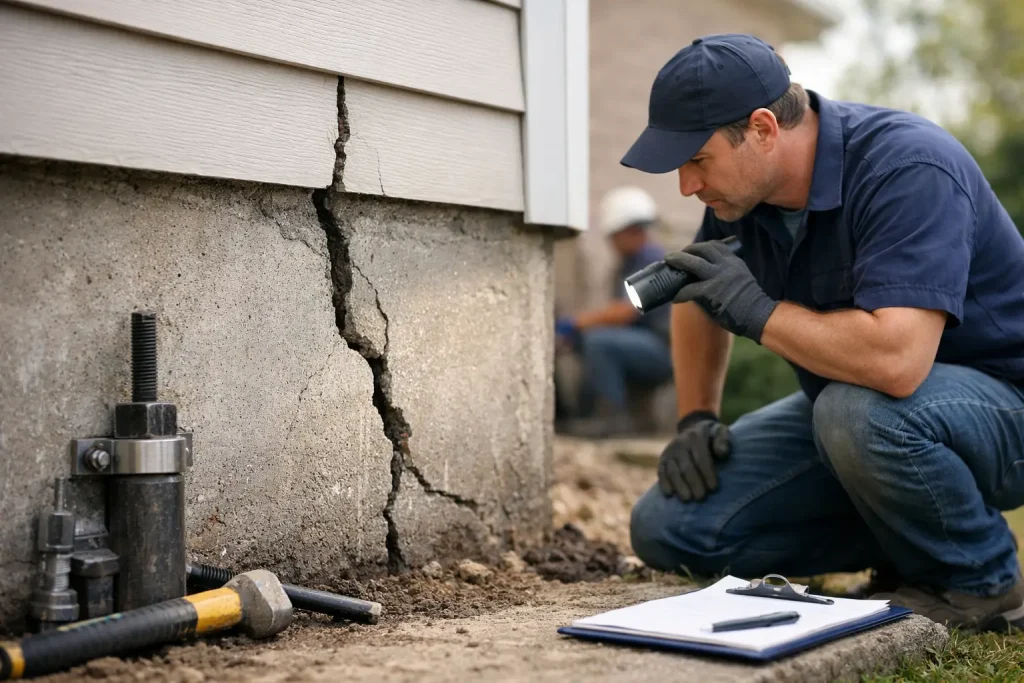
A thin crack in a basement wall may be a normal sign of concrete curing. A crack that widens, allows water inside, or appears beside doors that no longer close correctly deserves a closer look. Foundation repairs are not a one-size-fits-all service. The right solution depends on what is moving, why it is moving, and whether the problem is active.
For homeowners, landlords, and property managers in Washington, DC, Prince George’s County, and nearby Maryland communities, early evaluation can prevent a localized concern from becoming a larger structural and moisture-control project. The goal is not to repair every cosmetic crack. It is to identify conditions that can affect safety, water management, building performance, and property value.
What Foundation Problems Usually Look Like
Foundation distress rarely announces itself with one dramatic event. More often, it shows up through several changes around the building. Interior drywall cracks, uneven floors, sticking windows, gaps around trim, and doors that rub or fail to latch can all point to movement. In a basement or crawl space, look for wall cracks, bowed walls, crumbling masonry joints, damp spots, white mineral deposits, or water along the floor perimeter.
Outside, signs may include stair-step cracks in brick or block, separation between an addition and the original structure, settling patios, or soil that slopes toward the home. These symptoms do not automatically mean the foundation is failing. Seasonal expansion and contraction, minor settlement, and normal material movement can create small cracks. The concern rises when cracks grow, recur after patching, run horizontally across a wall, or occur with water intrusion and visible displacement.
A property with a finished basement can hide early warning signs. Landlords and commercial managers should also pay attention to recurring tenant reports of moisture, odors, cracked finishes, or doors that suddenly stop operating as expected. Repeated minor repairs in the same area often indicate an underlying condition that has not been addressed.
Why Foundations Move in DC and Maryland
The cause matters as much as the crack. Repairing the visible damage without correcting the source may only delay the next problem.
Water is one of the most common contributors. Roof runoff that spills beside the foundation, clogged gutters, short downspouts, poor grading, and failed drain systems can saturate soil near the building. Wet soil becomes heavier and can place pressure on below-grade walls. When the soil dries, it can shrink or shift, creating a different type of movement. Freeze-thaw cycles can add stress where water collects around walks, walls, and masonry.
Soil conditions, construction age, nearby excavation, tree roots, plumbing leaks, and drainage changes after landscaping work can also affect a foundation. In urban and older suburban areas, properties may have additions, retaining walls, older masonry, or previous repairs that require a more careful evaluation. A repair plan should account for the building’s structure, site conditions, and local code requirements rather than rely on a generic fix.
When Foundation Repairs Should Not Wait
Some conditions warrant prompt professional assessment, especially when a building is occupied or a real estate transaction is underway. Horizontal cracks or bowing in basement walls can indicate lateral soil pressure. Large vertical or diagonal cracks, visible offsets across a crack, and separation at corners may point to more significant settlement or movement.
Water entering through foundation walls is also more than a cleanup issue. Continued moisture can damage finishes, support mold growth, deteriorate wood framing, and affect the usability of basement or ground-level spaces. For rental and commercial properties, recurring water problems can lead to tenant complaints, unit downtime, and more extensive restoration work.
Act quickly if you see any of the following conditions:
- A foundation wall is bowing, leaning, or visibly displaced.
- Cracks are widening, spreading, or reopening after prior patching.
- Water enters after ordinary rain or collects in a basement or crawl space.
- Floors slope noticeably or doors and windows begin sticking throughout the structure.
- Masonry cracks follow a stair-step pattern and separate at joints.
A professional inspection helps distinguish between an urgent structural issue, a drainage problem, a waterproofing need, or a cosmetic repair. That distinction protects owners from both underreacting and paying for work that does not solve the actual problem.
How the Right Repair Is Determined
Reliable foundation repairs begin with diagnosis. A contractor should inspect both the interior and exterior, review crack patterns, identify moisture sources, look at drainage conditions, and consider how the structure is performing as a whole. Depending on the condition, an engineer may be needed to evaluate structural movement and provide repair recommendations.
Small, stable cracks may only need proper sealing and monitoring. Cracks that admit water may require injection or waterproofing measures, along with exterior drainage corrections. Bowed or pressured walls can require structural reinforcement, wall stabilization, or excavation and repair from the exterior. Settlement-related conditions may call for a more specialized structural solution.
There are trade-offs. An interior water-management approach can control water entering a basement without requiring major exterior excavation, but it does not correct every outside drainage issue. Exterior waterproofing can provide direct protection at the wall, yet access, landscaping, sidewalks, utilities, and adjoining structures can affect cost and feasibility. The best approach depends on the source of the problem and the building’s condition.
Drainage Is Often Part of the Solution
Foundation work is frequently connected to water control. A repaired crack will remain vulnerable if roof water continues to pour against the same wall. Before and after structural or waterproofing work, drainage should be evaluated as part of the overall scope.
That may include cleaning and maintaining gutters, extending downspouts away from the structure, adjusting soil grades, correcting low areas near the building, and addressing leaking exterior faucets or underground plumbing. On properties with patios, driveways, retaining walls, or tightly spaced neighboring buildings, water may need a more customized path away from the foundation.
This is where broad construction experience is valuable. Drainage changes can affect masonry, concrete, landscaping, finishes, and access around the property. A coordinated plan helps avoid repairs that create new issues elsewhere.
What to Expect From a Professional Repair Process
A clear scope begins with an on-site review and honest discussion of the symptoms you have noticed. Property owners should be prepared to share when cracks appeared, whether water enters after certain weather events, whether recent construction or landscaping occurred, and whether the condition has changed over time. Photos from previous seasons can be useful when movement is intermittent.
The scope should explain the proposed repair, the cause it is intended to address, access requirements, expected disruption, and any related work needed to restore finishes or site conditions. For homes with finished basements, the contractor should discuss how flooring, drywall, insulation, utilities, and personal belongings will be protected or handled. For occupied multifamily and commercial spaces, planning should account for safety, tenant communication, work hours, and continuity of operations.
Permits, engineering, and code compliance may apply depending on the repair. These are not details to treat as optional. Proper documentation and compliant work can matter during a sale, refinance, insurance claim, or future renovation.
Protecting the Investment After Repairs
Once work is complete, monitor the repaired area and maintain the systems that protect it. Keep gutters clear, confirm downspouts direct water away from the building, and watch for new pooling after heavy rain. Avoid placing dense landscaping or excessive soil against siding and foundation walls. If a crack was repaired and marked for monitoring, check it periodically for change.
For landlords and property managers, foundation-related maintenance belongs in the larger property plan. Regular exterior inspections, prompt response to leaks, and documentation of recurring moisture concerns can reduce emergency calls and help preserve building conditions between turnovers.
Capitol Area Services Inc. approaches property repairs with the understanding that a foundation concern can affect far more than one wall. A careful evaluation, sound workmanship, and attention to drainage and code requirements provide a practical path forward for residential and commercial properties alike.
If you are seeing movement, moisture, or recurring cracks, do not let uncertainty dictate the next step. A timely professional assessment can give you a defined repair plan and the confidence to protect the property before a manageable issue becomes a disruptive one.