
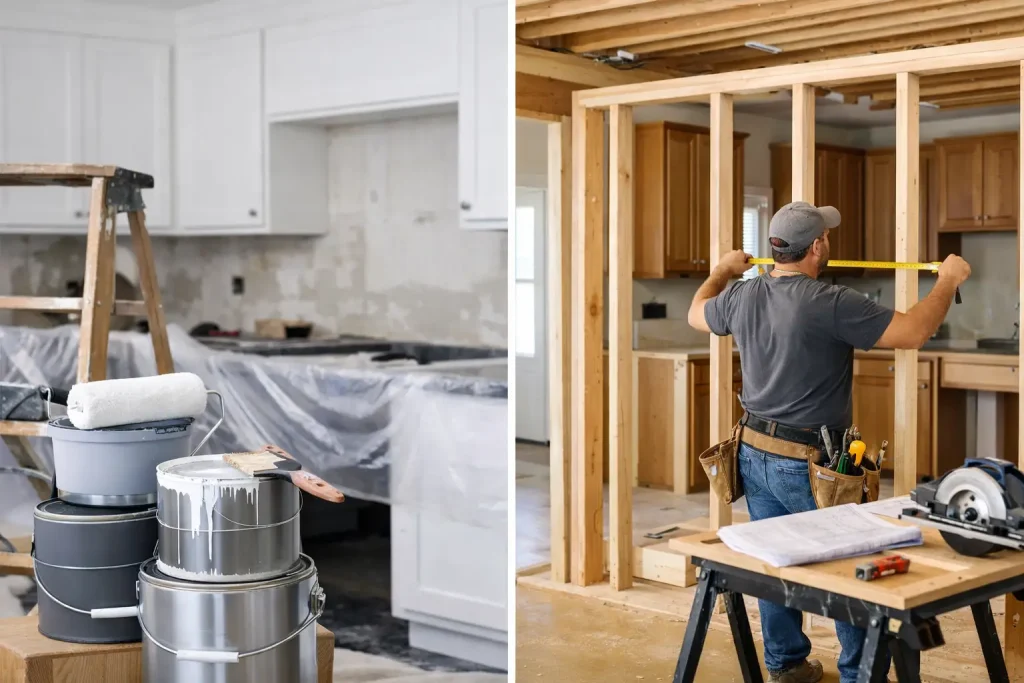
If you are planning work on a home, rental unit, or commercial space, the difference between renovation and remodel matters more than most people expect. These two terms get used interchangeably, but they do not always describe the same scope, cost, permitting needs, or construction process. Knowing which one fits your project helps you budget properly, set realistic timelines, and hire the right contractor from the start.
In practical terms, renovation usually means restoring or updating an existing space without changing its basic layout or function. Remodeling goes further. It changes how a space is organized, used, or built. That distinction affects everything from design decisions to inspections.
What is the difference between renovation and remodel?
A renovation improves what is already there. The room still serves the same purpose, and the overall footprint usually stays the same. You might replace worn flooring, install new cabinets in the same locations, update tile, repaint walls, swap out fixtures, or repair damaged finishes. The goal is to refresh, repair, or modernize.
A remodel changes the structure, layout, or use of the space. That can mean moving walls, relocating plumbing lines, reworking electrical systems, expanding a bathroom, opening a kitchen to the living area, or converting a basement into livable space. The goal is not just to improve appearance. It is to change function, flow, or configuration.
A simple example helps. If you replace old kitchen cabinets, countertops, appliances, and flooring but keep the sink, stove, and walls in the same general locations, that is typically a renovation. If you remove a wall, move the island, relocate plumbing, and redesign the kitchen layout for better circulation, that is a remodel.
Why homeowners and property managers mix them up
The confusion is understandable because many projects include parts of both. A bathroom upgrade may begin as a renovation, then shift into a remodel once hidden water damage appears behind the walls or the owner decides to enlarge the shower and move the vanity. In older homes around DC and Maryland, that happens often. Once walls are opened, the real condition of framing, wiring, plumbing, or insulation can change the scope.
That is why clear project planning matters. The label itself is less important than understanding what the work actually involves. Still, using the right term leads to better conversations with contractors, lenders, inspectors, and insurance representatives.
Renovation usually focuses on updates and repairs
Renovation work is often the right choice when the structure is sound and the layout already works. The property may simply look dated, show wear from years of use, or need repairs after tenant turnover or deferred maintenance. In those cases, renovation can improve appearance, function, and value without the added cost of major structural changes.
Common renovation work includes replacing finishes, updating fixtures, repairing drywall, refinishing hardwood floors, installing new doors, upgrading trim, replacing roofing or siding, and modernizing kitchens or bathrooms without relocating major systems. For landlords and property managers, renovation is often the most efficient path when the goal is to improve rentability and reduce downtime.
Renovation can still require permits, especially if systems such as electrical, plumbing, or mechanical equipment are being replaced. But in many cases, it is more straightforward than a remodel because the existing configuration remains intact.
Remodeling changes the way a space works
A remodel makes sense when the current layout no longer supports the way the property needs to function. Maybe a family wants an open-concept kitchen, an owner needs an extra bathroom, or a buyer purchased a dated home that requires major reconfiguration. In commercial or multifamily settings, remodeling may be necessary to meet current code, accessibility requirements, or operational needs.
Because remodeling often involves demolition, framing, new rough-ins, engineering considerations, and multiple trades working in sequence, it usually carries more complexity. Structural walls may need review. Plumbing relocations may require extensive work below the floor or behind walls. Electrical service may need upgrades to support new equipment or room configurations.
That added complexity does not mean remodeling is the wrong choice. It means the planning needs to be stronger. A well-executed remodel can solve long-term problems that cosmetic updates never will.
Cost differences are real, but they depend on scope
In general, renovations cost less than remodels. If you are mainly replacing visible materials and keeping the room layout intact, labor and material costs are easier to predict. The project is usually faster, with fewer unknowns.
Remodeling typically costs more because it affects the bones of the space. Once you move walls or utility lines, the project becomes more labor-intensive and permit-sensitive. There is also a higher chance of uncovering issues such as code violations, moisture damage, out-of-date wiring, or framing that needs correction.
That said, a high-end renovation can cost more than a modest remodel. Material selections, custom work, site conditions, and the age of the building all play a role. The better question is not whether one is always cheaper. It is whether the level of work matches your goal.
If you only need a clean, updated finish, remodeling may be more than necessary. If the current layout is inefficient or the property has serious underlying issues, renovation alone may not go far enough.
Permits, code compliance, and inspections
This is one of the biggest reasons the renovation versus remodel distinction matters. Renovation may involve limited permitting, depending on what is being replaced. Remodeling more often triggers permit review because it changes structural elements or building systems.
For example, replacing cabinets may not require the same level of review as moving a sink, changing electrical circuits, or removing a wall. Converting unfinished space into a bedroom or office can also trigger code requirements related to egress, insulation, smoke detection, ceiling height, and HVAC.
In the DC and Maryland region, permit requirements vary by jurisdiction, and older properties can bring added layers of compliance. That is why owners should not rely on assumptions or casual online advice. Projects should be evaluated based on actual scope, local code, and property condition.
Working with a licensed and insured contractor helps protect against shortcuts that create problems later during resale, inspection, refinancing, or insurance claims.
Which option adds more value?
Both can add value, but they do it in different ways.
Renovation often delivers value through appearance, condition, and marketability. Fresh finishes, updated kitchens and baths, repaired damage, and improved maintenance conditions can make a property more appealing to buyers and tenants. If the existing layout is already functional, renovation may offer a strong return without overbuilding.
Remodeling adds value when it fixes a real functional problem. Opening up a cramped floor plan, adding a bathroom, improving traffic flow, or converting unusable space into legal living area can make the property more competitive and useful. In some cases, that leads to stronger long-term value than cosmetic upgrades alone.
The trade-off is that remodeling costs more and usually takes longer. Not every property needs major reconfiguration to perform better in the market. A smart project starts with the question, what is holding this property back right now?
How to decide what your project really is
Start with the function of the space. If you like the current layout and want to improve condition, finishes, or efficiency, you are probably looking at a renovation. If you need the space to work differently, you are likely planning a remodel.
Then look at the systems behind the walls. Are plumbing, electrical, structural framing, or mechanical components staying in place? If yes, renovation may be enough. If those systems need to move or be significantly rebuilt, the project is moving into remodeling territory.
Finally, think about the property as a whole. A quick visual update may help a sale or rental listing, but it will not fix poor layout, code problems, or long-term wear in critical building components. On the other hand, a full remodel is not always necessary for a home that simply needs solid repairs and modern finishes.
Capitol Area Services Inc. works with property owners who need that distinction spelled out clearly before work begins, because accurate scope leads to better decisions and fewer surprises.
The best choice depends on the property, not the label
A lot of owners get stuck on terminology when they should be focused on scope, condition, and end result. Renovation is usually the better fit for refreshing, repairing, and modernizing what already works. Remodeling is the better fit for changing layout, use, or building systems to create a space that works better than before.
The right answer depends on budget, timeline, code requirements, and the condition of the property once construction begins. In older homes and heavily used buildings, a project can also shift from one category to the other as hidden issues come to light.
The most useful next step is not choosing a word. It is getting a realistic assessment of the space, the systems involved, and the level of work required to do the job correctly.