
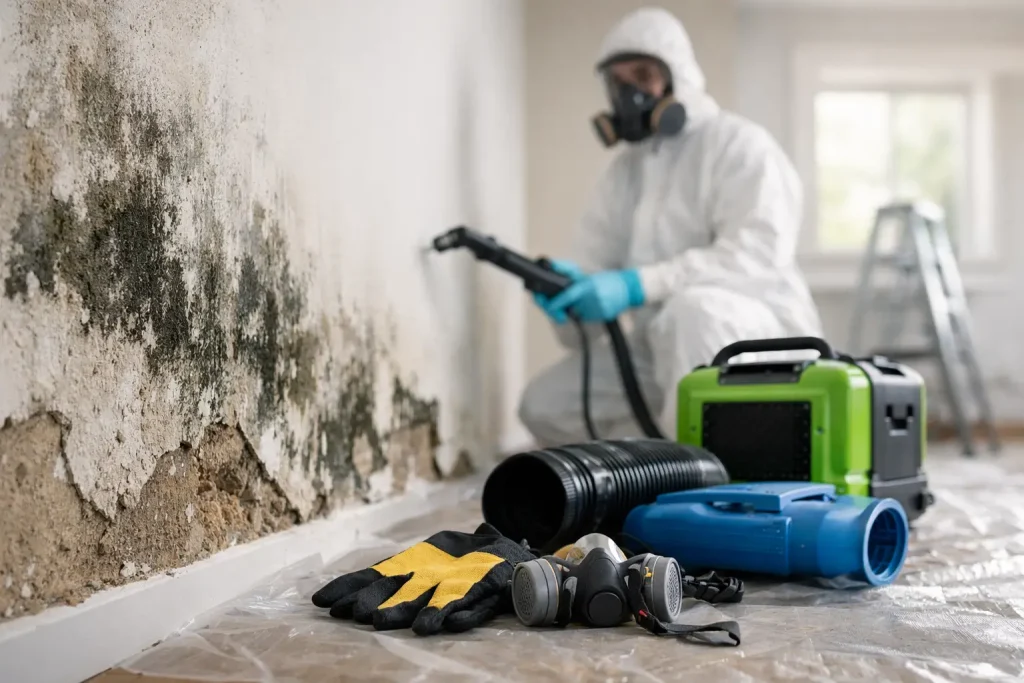
A musty odor in a basement, dark spotting around a bathroom ceiling, or staining after a roof leak usually means the problem is larger than what you can see. Mold remediation for homes is not just about cleaning a surface. It is about finding moisture, containing contamination, removing damaged materials when necessary, and restoring the space so the problem does not keep coming back.
For homeowners and property managers in the DC and Maryland region, mold issues often show up after plumbing leaks, storm damage, poor ventilation, foundation moisture, or long-term humidity. In older homes, the source may be hidden behind walls, under flooring, or above ceilings. That is why a quick wipe-down rarely solves the real problem.
What mold remediation for homes actually includes
Professional mold remediation starts with identifying the extent of the issue and the conditions feeding it. Mold needs moisture and an organic surface to grow. Drywall, wood framing, insulation, ceiling tiles, carpeting, and trim can all become affected if water intrusion is left unresolved.
A proper remediation process usually includes moisture detection, evaluation of affected materials, containment of the work area, air filtration, removal of unsalvageable materials, detailed cleaning of salvageable structural surfaces, and drying of the area. If the mold developed after a water event, repairs may also be part of the scope. In many cases, remediation and reconstruction need to work together.
That matters because mold is often a symptom of a building problem, not a stand-alone cleaning issue. If the underlying leak, ventilation deficiency, or drainage failure is not corrected, the mold can return even after a thorough cleanup.
Why surface cleaning is not enough
One of the most common mistakes property owners make is treating mold like dirt. Paint, bleach, or over-the-counter sprays may lighten a stain, but they do not address trapped moisture or contamination inside porous materials. Drywall and insulation are especially vulnerable because mold can spread beyond the visible patch.
There is also a cross-contamination risk. Disturbing mold without proper containment can spread spores to adjacent rooms through air movement, HVAC systems, or foot traffic. That is one reason larger or hidden mold problems should be handled with a controlled process rather than a cosmetic fix.
The right approach depends on the size of the affected area, the materials involved, and whether the moisture source is active. A small isolated issue around a non-porous surface may be straightforward. Widespread growth after a leak behind walls is a very different project.
Common causes of mold in residential properties
In this region, mold often appears after conditions that seem minor at first. A slow pipe drip under a sink can damage cabinetry and subflooring over time. An overflowing gutter can push moisture into fascia, sheathing, and wall cavities. Poorly vented bathrooms can create recurring condensation that affects ceilings and trim.
Basements and crawl spaces are another frequent source. Ground moisture, foundation cracks, sump failures, and limited airflow can create the damp conditions mold needs. In attics, roof leaks and improper ventilation are common triggers. Window leaks, HVAC condensation line issues, and appliance failures can also contribute.
For landlords and property managers, mold risk increases when turnover inspections miss small leaks or when maintenance issues are delayed between tenants. In multifamily buildings, one unit’s plumbing issue can affect neighboring spaces before the problem is noticed.
Signs you should not ignore
Visible staining is only one indicator. A persistent musty smell, peeling paint, warped trim, bubbling drywall, soft flooring, or repeated allergy-like complaints in one part of the home can point to a moisture and mold issue. Sometimes the clearest warning sign is historical: if a space had prior water damage and was not fully dried or repaired, mold may be present behind finished surfaces.
It also helps to pay attention to timing. If odors get stronger after rain, during humid weather, or when the HVAC system runs, that can provide clues about where moisture is entering or how contamination is moving through the property.
How a professional remediation process works
Every project is different, but a reliable process follows a logical order. First, the source of moisture must be identified and addressed. Without that step, the rest of the work is temporary.
Next comes isolation of the affected area. Containment helps prevent spores and debris from spreading during demolition and cleaning. Depending on the scope, this may involve plastic barriers, controlled access, and negative air pressure with HEPA-filtered equipment.
After containment, damaged porous materials that cannot be effectively cleaned are removed. That may include drywall, insulation, carpeting, or sections of trim. Structural materials such as framing may be cleaned and treated if they remain sound. The space is then dried thoroughly and cleaned using methods appropriate to the material and level of contamination.
Once remediation is complete, the property may need reconstruction work such as replacing drywall, repainting, reinstalling trim, or rebuilding damaged finishes. This is where working with an experienced general contractor can simplify the process. When one company can handle remediation and repair, the project tends to move more efficiently and with better continuity.
When to call for help instead of handling it yourself
There is a difference between cleaning a small area of mildew on a bathroom tile surface and dealing with mold tied to water intrusion. If the mold covers a larger area, keeps returning, affects porous materials, follows a leak, or appears in HVAC-connected spaces, professional assessment is the safer route.
The same applies if occupants have sensitivities, if the property is being prepared for sale, or if the issue may involve insurance documentation or tenant concerns. In those situations, clear scope, proper handling, and documented repairs matter.
For buyers considering older homes or rehab properties, mold should also be evaluated in the context of the building as a whole. Staining in one area can point to deferred maintenance elsewhere. A qualified contractor can help determine whether the issue is localized or part of a broader restoration need.
Choosing a contractor for mold remediation for homes
Not every contractor approaches mold work with the same level of discipline. The goal is not just to remove what is visible. The goal is to solve the moisture problem, protect unaffected areas, and restore the property correctly.
Look for a licensed and insured company with restoration and repair capability, not just cleanup services. Ask how they identify moisture sources, how they contain affected areas, what materials they remove versus clean, and whether they can complete the reconstruction afterward. Experience with residential repairs, code-compliant restoration, and property damage work is especially valuable.
In the DC and Maryland market, homes range from older detached properties to condos, townhomes, and multifamily buildings. Each comes with different access challenges, ventilation issues, and repair requirements. Local experience matters because remediation is often tied to broader construction knowledge.
Preventing mold after remediation
Successful remediation should be followed by practical prevention. That usually means repairing leaks quickly, improving drainage around the home, maintaining gutters and downspouts, using exhaust fans in bathrooms and kitchens, and controlling humidity in basements and lower levels.
It may also mean upgrading problem areas during reconstruction. Water-resistant materials, better ventilation, improved insulation details, and properly sealed penetrations can reduce future risk. In many cases, prevention is not a separate project. It is built into doing the repair work the right way.
Capitol Area Services Inc. works with homeowners and property managers who need more than a temporary fix. When mold is tied to water damage, structural repairs, interior restoration, or turnover work, the value is in having a contractor who can handle the full scope with accountability.
If you suspect mold, the best next step is not guesswork. It is getting a clear assessment of the moisture source, the affected materials, and the repair path so you can protect the property before a limited problem becomes a larger one.