
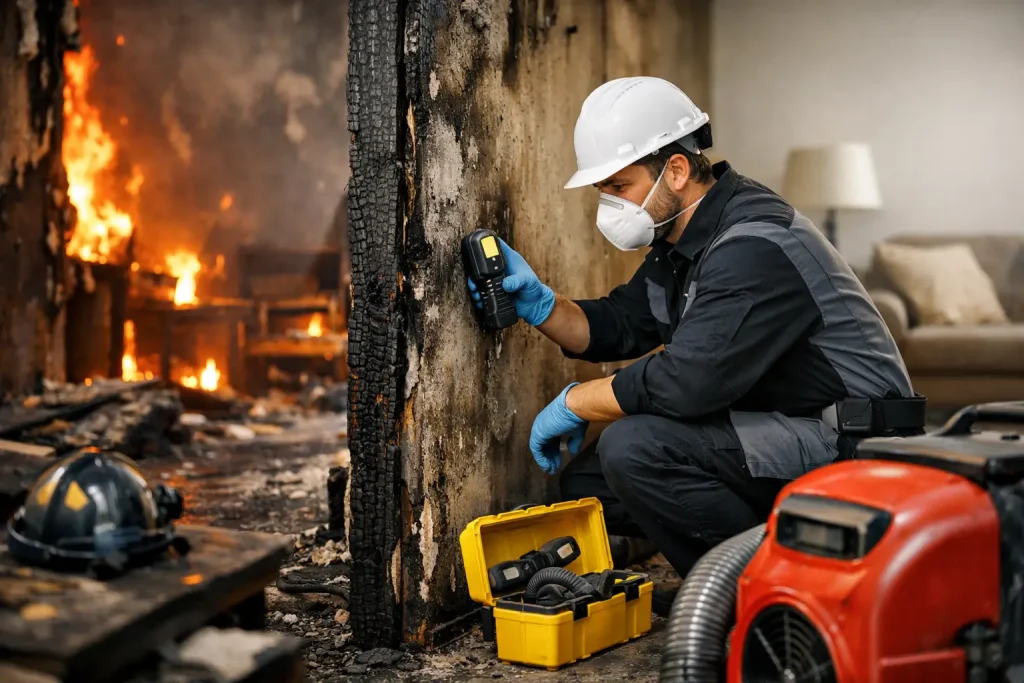
A fire rarely leaves damage in just one place. Even when flames are contained to a single room, smoke can travel through the building, water from suppression efforts can soak framing and finishes, and hidden structural issues can develop fast. That is why fire damage restoration services need to address the full condition of the property, not just the areas that look burned.
For homeowners, landlords, and property managers in the DC and Maryland region, the real challenge is often what happens after the fire department leaves. The property may be unsafe to occupy, insurance documentation may be underway, and decisions about cleanup, demolition, repair, and reconstruction need to happen in the right order. A qualified restoration contractor helps move that process forward without cutting corners.
What fire damage restoration services typically include
At a practical level, fire damage restoration services are a combination of emergency response, damage assessment, cleanup, repair, and rebuilding. The exact scope depends on the size of the fire, the age of the structure, the affected materials, and whether the property is residential, multifamily, or commercial.
The first step is usually site stabilization. That may include securing openings, addressing immediate safety hazards, and preventing additional damage from weather exposure or unauthorized entry. If the fire compromised roofing, windows, doors, or exterior walls, temporary protection matters just as much as interior cleanup.
Next comes a detailed assessment. Burned materials are only part of the picture. Smoke residue can settle in HVAC systems, behind walls, and on surfaces far from the source. Water from firefighting efforts can create a second layer of damage, especially in insulation, subfloors, drywall, and lower-level spaces. A good assessment identifies what can be cleaned, what must be removed, and what needs to be rebuilt to current code.
After that, the work often moves into controlled demolition and debris removal. This stage should be selective, not reckless. Removing everything may feel faster, but it can increase cost and wipe out salvageable materials. On the other hand, trying to preserve too much can leave odor, staining, or unsafe assemblies behind. Experience matters here because the right decision is not always obvious from the surface.
Smoke, soot, and odor are not minor issues
One of the most misunderstood parts of fire restoration is smoke damage. Many property owners focus on visible charring, but smoke and soot can cause broad contamination. Different types of fires leave different residues. A fast-burning, high-heat fire can affect surfaces differently than a slow, smoldering fire involving synthetic materials. That changes the cleaning method, the likelihood of permanent staining, and the level of odor control required.
Soot is acidic. If it is not removed properly and promptly, it can discolor paint, damage metal finishes, and continue affecting indoor surfaces long after the fire is out. Odor is also more than an inconvenience. Lingering smoke smells can signal residue trapped in porous materials such as insulation, carpet, wood trim, cabinetry, and ductwork.
That is why fire damage restoration services often include specialized cleaning, deodorization, and air quality measures. In some cases, contents and finishes can be restored. In others, replacement is the only responsible option. The difference depends on material type, exposure level, and how quickly mitigation begins.
Structural repair and code compliance matter
After cleanup, the property still needs to function safely. Fire can weaken framing, compromise connections, crack masonry, and affect roof systems in ways that are not visible from a casual walk-through. Commercial and multifamily buildings may also have code-related concerns tied to fire-rated assemblies, egress, alarms, or accessibility.
This is where a general contractor with restoration experience brings real value. The job is not just cleaning up after a loss. It is returning the property to a sound, code-compliant condition. That may involve replacing drywall, insulation, flooring, doors, trim, cabinetry, electrical components, plumbing fixtures, or structural framing. In some cases, partial rebuilding is enough. In others, a larger reconstruction scope is the safer path.
Older homes and buildings in Washington, DC and Maryland can add another layer of complexity. Existing conditions may not match current standards, and fire damage can expose prior wear, outdated systems, or hidden deficiencies. Restoration work often intersects with permit requirements and inspection milestones. A contractor needs to know how to move from damage control into proper reconstruction without creating delays or compliance issues.
The role of water mitigation after a fire
A fire loss often includes water damage whether the fire was large or small. Sprinkler discharge, hose streams, and saturation from suppression efforts can affect ceilings, wall cavities, flooring, and contents. If moisture is left in place, mold growth and material breakdown can follow quickly.
That is why fire restoration and water mitigation are closely connected. Drying is not just about running fans. It involves moisture mapping, removal of unsalvageable wet materials where needed, and careful drying of structural components to avoid long-term problems. A contractor who understands both fire and water restoration can sequence the work correctly instead of treating them as separate issues.
For landlords and property managers, this is especially important in occupied or partially occupied buildings. One damaged unit can affect adjacent spaces through odor, moisture migration, and system disruptions. Fast containment and coordinated repairs help protect the rest of the asset.
How the restoration process usually unfolds
Most projects move through several phases, though the timeline depends on severity, insurance review, and permit requirements. First comes emergency stabilization and documentation. Then the property is assessed, and a scope is developed for cleanup, demolition, drying, odor treatment, repair, and reconstruction.
Once approvals are in place, damaged materials are removed and the structure is cleaned and prepared for repairs. Depending on the extent of the loss, reconstruction may range from finish replacement to substantial interior rebuilding. Electrical, mechanical, and plumbing systems may need inspection, repair, or replacement before walls and ceilings are closed back up.
There is rarely a one-size-fits-all schedule. A kitchen fire in a single-family home will move differently than a hallway fire in a multifamily property or a smoke event in a commercial suite. What matters is having one accountable team that can evaluate conditions, coordinate trades, and keep the work progressing in a logical order.
Choosing a contractor for fire damage restoration services
Not every contractor is equipped for restoration work. Fire-damaged properties require a mix of emergency judgment, construction knowledge, and code awareness. The contractor should be licensed and insured, experienced with both mitigation and rebuilding, and able to communicate clearly about what is salvageable, what needs replacement, and what approvals are required.
For many property owners, the best choice is a company that can handle the project from initial assessment through final repairs. That reduces handoff problems and helps keep responsibility clear. It also matters when insurance-related work overlaps with broader construction needs such as framing repair, system upgrades, finish replacement, or tenant turnover coordination.
Capitol Area Services Inc. works with residential and commercial properties across the DC and Maryland market, and that local experience matters on restoration jobs. Building type, permit expectations, housing stock, and occupancy demands all affect how a fire loss should be handled.
When fast action helps and when patience is smarter
After a fire, speed matters, but rushing the wrong parts of the job creates problems. It makes sense to secure the site, start assessment, document conditions, and prevent further damage immediately. It does not make sense to begin rebuilding before hidden moisture, smoke contamination, structural issues, and code requirements are fully understood.
That balance is what good restoration work looks like. The property owner gets timely action where it counts and disciplined decision-making where the details matter. Some materials can be saved and cleaned. Others should be removed without debate. Some repairs are straightforward. Others reveal larger issues once damaged assemblies are opened.
If your property has been affected by a fire, the goal is not to make it look good for the moment. The goal is to restore it the right way so it is safe, sound, and ready for long-term use. A dependable contractor helps you make those decisions with clarity, not guesswork.
The next best step after any fire is simple: get qualified eyes on the property early, before hidden damage has time to become a second problem.